
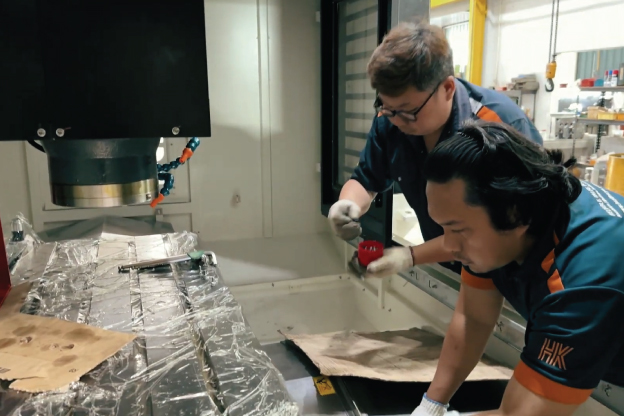
In the competitive landscape of Malaysian manufacturing in 2026, efficiency is measured in seconds. For industries ranging from automotive components to electronics, the ability to drill and tap thousands of holes with sub-micron accuracy is a baseline requirement. While a standard CNC mill can perform these operations, high-output facilities are increasingly moving toward a dedicated drilling and tapping machine to optimize their production cycles.
Why Dedicated Tapping Centers Outperform General Mills
The primary reason for selecting a specialized tapping center is the duty cycle. A general-purpose CNC mill is built for heavy material removal and large-scale profiling. In contrast, a Tapping Machine is engineered for high-acceleration Z-axis movement. These machines feature lightweight spindles that can accelerate and decelerate almost instantly, which is vital for “rigid tapping”—a process where the spindle rotation is perfectly synchronized with the feed rate to ensure flawless threads every time.
Using a dedicated drilling and tapping machine also protects your more expensive 5-axis mills from unnecessary wear. By offloading high-frequency hole-making to a specialized machine, you extend the life of your heavy-duty equipment while simultaneously cutting your per-part cycle time by up to 30%.
Technical Features of Modern Drilling Machines
When selecting a Drilling Machine in 2026, the technical specifications must align with the hardness of your materials and the depth of your holes. Key features to look for include:
- Through-Spindle Coolant (TSC): High-pressure coolant is blasted through the center of the drill bit to flush out chips and cool the cutting edge. This is essential for deep-hole drilling to prevent tool breakage.
- High-Speed Tool Changers: Modern tapping centers can swap tools in under 1 second, ensuring that the machine spends as much time as possible in the “green” (cutting) phase.
- Thermal Displacement Compensation: Advanced sensors detect heat buildup in the spindle and automatically adjust the machine’s coordinates to maintain precision over long shifts.
Choosing the Right Partner for Your Shop Floor
Integrating new machinery into a factory floor requires more than just a purchase; it requires a strategic layout and technical training. To find the right balance of automation for your shop, you can connect with a technical machinery team to discuss spindle speeds and tool-holding options. For high-volume projects, seeking a comprehensive workshop assessment will help you determine if a standalone unit or a multi-spindle fleet is the right ROI to move for your floor.