
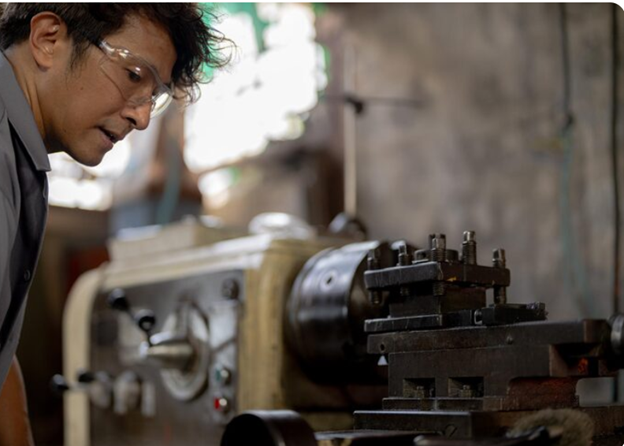
The backbone of the modern Malaysian workshop is the cnc mill. As we move through 2026, the demand for higher precision in industries such as medical device manufacturing and aerospace has fundamentally changed how shop owners select their equipment. A “one-size-fits-all” approach no longer works; instead, success depends on matching the specific CNC milling machine function to your production goals.
The Core Mechanics: How CNC Milling Works
At its most basic, the CNC milling machine function involves a stationary workpiece and a rotating cutting tool that removes material to create a specific shape. However, modern CNC (Computer Numerical Control) technology has evolved this into a highly complex, automated process. By translating CAD (Computer-Aided Design) files into precise G-code, these machines can execute toolpaths with tolerances within microns. Whether you are creating flat surfaces, intricate pockets, or complex gears, the CNC mill provides a level of repeatability that manual machining simply cannot match.
Navigating the Different Types of CNC Milling Machines
Several distinct architectures. Understanding these is vital for floor optimization:
- Vertical Machining Centers (VMC): These are the most common mills found in Malaysian shops. In a VMC, the spindle is oriented vertically. They are ideal for 3-axis work where the cutting tool approaches the workpiece from above. They are widely used for die-making, mold production, and general parts manufacturing.
- Horizontal Machining Centers (HMC): These feature a spindle oriented horizontally. The primary advantage of an HMC is chip evacuation—gravity helps metal chips fall away from the cut, preventing “recutting” and heat buildup. HMCs are often equipped with pallet changers, making them the gold standard for high-volume, unattended “lights-out” manufacturing.
- 5-Axis CNC Mills: By adding two rotational axes, these machines can reach five sides of a part in a single setup. This is essential for the complex, organic geometries found in turbine blades or skeletal implants.
Performance vs. Budget: High-Speed and Low-Cost Options
For high-output environments where cycle time is the primary KPI, a high speed cnc milling machine is essential. These machines feature spindles capable of 20,000+ RPM and advanced cooling systems to maintain accuracy during rapid material removal. Conversely, for startups or small-scale prototyping, a low-cost CNC milling machine offers a reliable entry point. While they may have slower rapid traverse speeds, they still utilize high-quality ball screws and controllers to deliver professional-grade results without the massive capital outlay.
Choosing the right machine is a balance of your current workload and your 5-year growth plan. To assist with your facility planning, you can consult with a local planning team for a site assessment. If you are ready to expand your production capabilities, an expert machinery consultation can help you navigate the ROI and technical requirements of your next upgrade.