
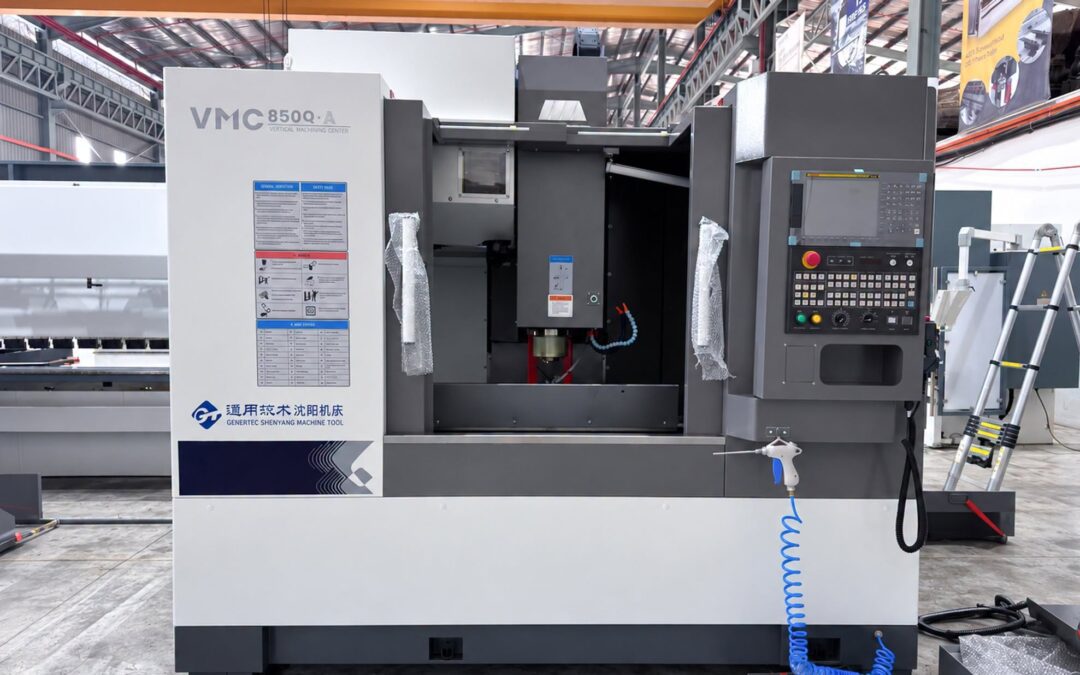
When you compare quotes for a new CNC milling machine, two numbers always stand out on the spec sheet: positional accuracy and repeatability. They sound almost identical, yet they tell you very different things about how a machine will perform on your floor.
Start with this quick guide:
| Spec | What it tells you | Matters most for |
|---|---|---|
| Positional accuracy (hitting the bullseye) | How close the machine lands to the exact coordinate you programmed | One-off precision molds, aerospace parts and components that must mate with parts made elsewhere |
| Repeatability (grouping your darts tightly) | How consistently the machine returns to the exact same spot, again and again | Batch production, so part 1 through part 500 come out identical |
The Dartboard Analogy
- Positional accuracy (hitting the bullseye): how close the machine lands to the exact mathematical coordinate you programmed. High accuracy is critical for one-off precision molds, aerospace parts, and complex components that must mate seamlessly with parts made elsewhere.
- Repeatability (grouping your darts tightly together): how consistently the machine returns to the exact same spot, again and again. High repeatability is the number one factor for batch production, ensuring part 1 through part 500 come out identical.
A machine can group its darts tightly but away from the bullseye, which means good repeatability but poor accuracy. That is why it helps to read both numbers together rather than relying on one.
What to Look for When Buying
- For high-volume batch parts, prioritise rock-solid repeatability so dimensions stay consistent all day.
- For tight-tolerance molds or multi-sided precision parts, look for both high accuracy and linear glass scales. These are ultra-precise position sensors that eliminate heat-related screw expansion errors.
Questions to Ask When Comparing Quotes
- What are the stated positional accuracy and repeatability figures, and how are they measured?
- Does the machine use linear glass scales, or rely on the ball screws alone?
- What do my parts need most: matching coordinates exactly, or producing identical parts in volume?
- How do the machine’s cooling and rigid construction help it hold these figures through a full shift? See our guide to micron-level precision in semiconductor parts for more on this.
Conclusion
Accuracy tells you whether the machine goes where you tell it. Repeatability tells you whether it keeps doing it. Match the spec that matters most to the parts you make, and you will compare machine quotes with much more confidence. Also consider how many setups your parts need, as covered in our 3-axis vs 5-axis milling guide.
Comparing machine quotes? Visit us at Jalan Perusahaan Utama, Taman Industri Selesa Jaya, Balakong, Selangor, or reach the team through our Contact Us page.
Frequently Asked Questions
What is positional accuracy in a CNC machine?
It is how close the machine lands to the exact coordinate you programmed.
What is repeatability?
It is how consistently the machine returns to the same position over and over. It matters most for batch production where every part must be identical.
Which matters more, accuracy or repeatability?
It depends on your work. Batch production leans on repeatability, while one-off molds and multi-sided precision parts need both accuracy and repeatability.
What are linear glass scales?
They are ultra-precise position sensors that eliminate heat-related screw expansion errors, helping the machine hold accuracy.
Can a machine be repeatable but not accurate?
Yes. It may land in the same spot every time but away from the programmed coordinate, like darts grouped tightly away from the bullseye.